martes, 30 de octubre de 2012

Image Analysis


In this image the visible objects are a bunch of dead and white people, an alive and standing white guy, a fence, a tough floor, walls. The man is reflectionating. 
What I can infer from this image is a summary of the holocaust, the artist wanted to explain that lot of people died and somes did not. But the ones that did not feel exactly the same as the ones that did.
Another inference I made, is that the standing man is remembering how he abused in his glory times, and now he has lost it all as consequence.
My main question is what does the standing man is thinking.

X writting as Y

In this case it is men writing as women and women writing as men. I found 2 good example.

J.K. Rowling writing as Harry Potter, telling the story of this young boy who discovers that he is a magician, son of excelent wizards. He is a legend also, for surviving to the attack of Voldemort (an evil magician) being just a baby.

Charles Dicken writing as Esther Summerson in "Bleak House". She tells the story of her involvement in the tortuous lawsuit of Jarndyce vs Jarndyce. The heartstrings are tugged when she tells us of losing her bloom after catching smallpox, but we know that her author will pair her up with the handsome young doctor.

The benefits of writing as an opposite sex, is that the author can express a very different perspective of how would a man or woman would react in some situation. Also there are some limitiation, because the author has never had the experience of being the other sex, so he doesn't has the escence and vibrations that women or men do have.

Some author may take another approach because of the message they want to express, also it is easier for them to express themselves.

Dunkirk Evacuation

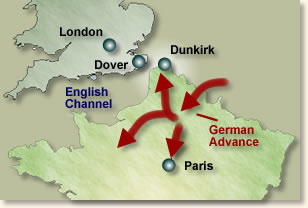
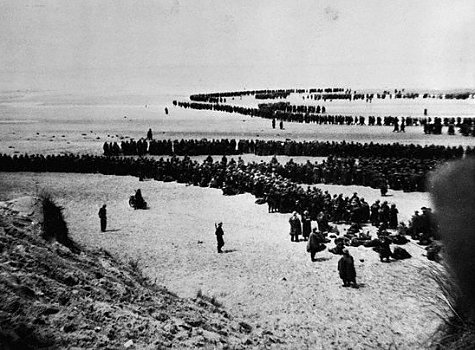
Dunkirk, and the evacuation associated with the troops trapped on Dunkirk, was called a  "miracle" by Winston Churchill. As the Wehrmacht swept through western Europe in the  spring of 1940, using Blitzkrieg, both the French and British armies could not stop the onslaught. For the people in western Europe, World War Two was about to start for real. The "Phoney War" was now over.   The advancing German Army trapped the British and French armies on the beaches around Dunkirk. 330,000 men were trapped here and they were a sitting target for the Germans. Admiral Ramsey, based in Dover, formulated Operation Dynamo to get off of the beaches as many men as was possible. 

The British troops, led by Lord John Gort,  were professional soldiers from the British Expeditionary Force; trained men that we could not afford to lose. From May 26th 1940, small ships transferred soldiers to larger ones which then brought them back to a port in southern Britain.  The beach at Dunkirk was on a shallow slope so no large boat could get near to the actual beaches where the men were. Therefore, smaller boats were needed to take on board men who would then be transferred to a larger boat based further off shore. 800 of these legendary "little ships" were used. It is thought that the smallest boat to make the journey across the Channel was the Tamzine - an 18 feet open topped fishing boat now on display at the Imperial War Museum, London.    


Tamzine - one of the 'little ships'  Despite attacks from German fighter and bomber planes, the Wehrmacht never launched a full-scale attack on the beaches of Dunkirk. Panzer tank crews awaited the order from Hitler but it never came. In his memoirs, Field Marshall Rundstadt, the German commander-in-chief in France during the 1940 campaign, called Hitler's failure to order a full-scale attack on the troops on Dunkirk his first fatal mistake of the war. That 338,000 soldiers were evacuated from the beaches at Dunkirk would seem to uphold this view.     


Their job done, the 'little boats' are towed up the Thames  One of the reasons put forward for Hitler not ordering an attack was that he believed that Britain had suffered from the might of the Wehrmacht once and that this experience would be sufficient for Britain to come to peace terms with Hitler. The total destruction of the British Expeditionary Force might have created such a climate of revenge in Britain that our involvement would be prolonged. That is one idea put forward for why Hitler did not order a full-scale attack on the beaches of Dunkirk - however, we will never know the true reason.

(Sourece: http://www.historylearningsite.co.uk/dunkirk.htm)

Atonement

1. What sort of social and cultural setting does the Tallis House create? What emotions and impulses are being acted upon or repressed by its inhabitants? 
Cecilia / Cee

The Tallis house creates a high class social culture, that as consecuence makes Cee imposible to be in an open relationship with Robbie, because he was an employee.

 2. A passion for order, a lively imagination, and a desire for attention seem to be Briony's strongest traits. In what ways is she still a child? Is her narcissism - her inability to see things from any point of view but her own - unusual in a thirteen-year-old?   

Briony still a child in the way she sees things just under her perspective. That is very unusual in a thirdteen-year.old child, at that time most of the kids have the hability to put themselves in the shoes of other man, empathy.

3. Why does Briony stick to her "version of the story" with such unwavering commitment? Does she act entirely in error in a situation she is not old enough to understand, or does she act, in part, on an impulse of malice, revenge, or self-importance?   

Eventhoug Briony is questioned a lot of times about what she saw at the garden, she answers always what she thinks that happend, but she isn't really sure, she didn't saw clearly Robbie's face. Briony blame Robbie because she use to be in love with him, but Robbie didn't accept her, so now Briony created a whole untrue story to blame him.

4. As she grows older, Briony develops the empathy to realise what she has done to Cecilia and Robbie. How and why do you think she does this? 

Robbie
I think that it is very difficult to a person not to develop the ability of putting themselves in other ones shoes, and it is even harder in the enviorment in which Briony lived, with good values and education. And such an important incident as the one that happend, makes Briony reflect about it, to the point she knows the pain she caused and she wants to apologize.


Pride and Prejudice


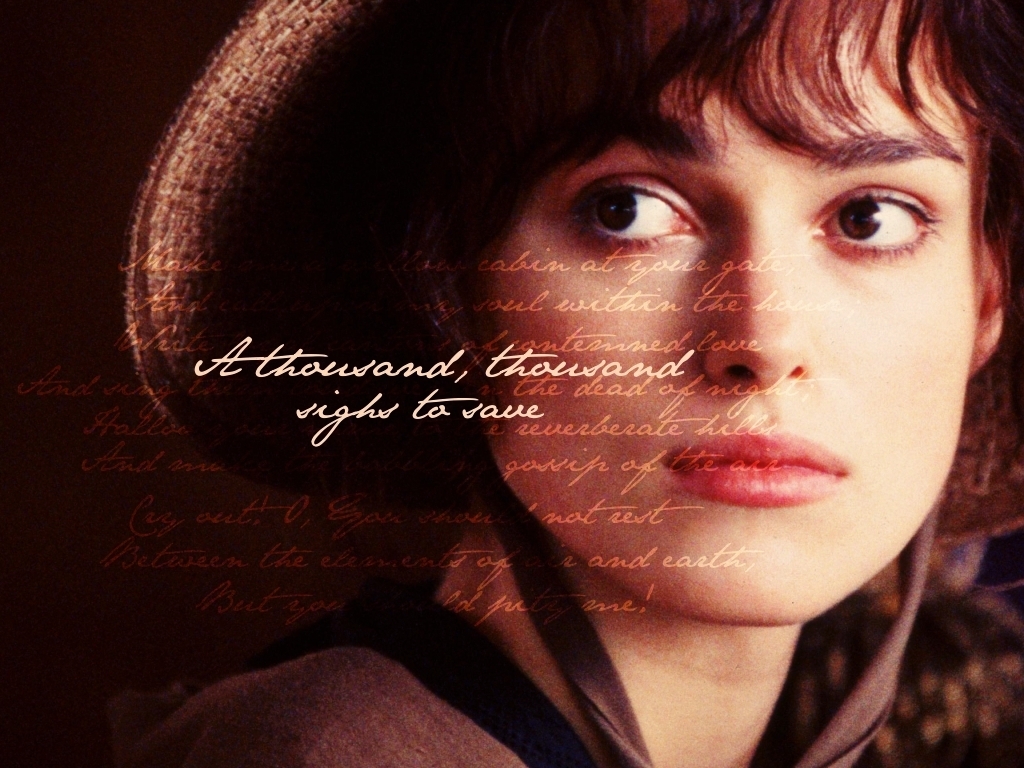
Pride and Prejudice is a novel written by Jane Austin that tell us the story of Elizabeth Bennett, a modern woman that fights versus the society of the early 19th-century England. She is the one that wants to choose who its going to be her husband, and not her parents. Eventhough the novel was written in 1813 it is very popular now a days. A recent film was made with Keria Knightley as the protagonist (2005).


1. Why do you think "Pride and Prejudice" continues to be a referent for modern tales?   

Because the conflict of the story can still be seen now a days, but in different ways and prespectives.

2. What do you think is the effect that these different authors (film directors, producers, modern writers) want to achieve in today's audiences?  

I think they want women to reflect about the relation between their life, and the protagonist life.

3. If you had to choose one of the previous versions to analyse, which would be the one and why?  

I would like to analyse the first version, because it is the more similar to the book, and I consider it is a very important fact, because it is the original novel the one that is rich in content and succes.


Page 287 Questions

1) What degrees of emancipation reinforcement of 18th-century family does Elizabeth Bennett's marriage to Mr. Darcy support?

Elizabeth Bennett's marriage has some emancipation values, for example, she is over-confident of her capacity to make independent decision. She chosed to marriage Mr. Darcy and not her mother. She rejected her future husband at first too.

2) What attitudes to marriage does Pride and Prejudice convey? What other options did Elizabeth Bennett have?

The attitude that "Pride and Prejudice" convey to marriage, is that women should be confident of their capacity to make decisions by their own, and they should judge by her selves if a man is the indicated or if he is not. Elizabeth could have rejected Mr. Darcy.


domingo, 28 de octubre de 2012

PEE Structure

This structure is very useful for essay or any case where you have to argument. The idea of PEE structure is to make your argument stronger by using evidence from a text. PEE stands for:


· Point: The point is the opinion or argument you stand for.

· Evidence: To give strenght to the argument, the next step is to put a quote from the original text to prove what you say is right.

· Explanation: The final step is to show the connection between the evidence and the point so its clear for everyone what is the background of your argument.

The PEE can only be used when there is the intention of introducing a quotation in the text. The importance of quoting is based in the strenght that the argument can get. And in an essay the arguments are the most important thing,

lunes, 22 de octubre de 2012

Jewish Traditions

File:ShemaMezuzah.jpg
Mezuzah


Mezuzah: A mezuzah is a piece of parchment (often contained in a decorative case) inscribed with specified Hebrew verses from the Torah (Deuteronomy 6:4-9 and 11:13-21). These verses comprise the Jewish prayer "Shema Yisrael", beginning with the phrase: "Hear, O Israel, the LORD our God, the LORD is One"
(http://en.wikipedia.org/wiki/Mezuzah  16/10/12  9:02am)


File:Tefillin.JPGTefillin: Tefillin, also called phylacteries, (from Ancient Greek phylacterion, meaning "to guard, protect") are a set of small black leather boxes containing scrolls of parchment inscribed with verses from the Torah, which are worn by observant Jews during weekday morning prayers. Although "tefillin" is technically the plural form (the singular being "tefillah"), it is loosely used as a singular as well. The hand-tefillin, or shel yad, is placed on the upper arm, and the strap wrapped around the arm, hand and fingers; while the head-tefillin, or shel rosh, is placed above the forehead. The Torah commands that they should be worn to serve as a "sign" and "remembrance" that God brought the children of Israel out of Egypt.
 (http://en.wikipedia.org/wiki/Tefillin 16/10/12  9:12am)

File:Shofar.JPG
Shofar:
A shofar, is a horn, traditionally that of a ram, used for Jewish religious purposes. Shofar-blowing is incorporated in synagogue services on Rosh Hashanah and Yom Kippur. Shofar come in a variety of sizes.

 (http://en.wikipedia.org/wiki/Shofar   16/10/12)


Hanukkah: (sometimes transliterated Chanukkah) is a Jewish holiday celebrated for eight days and nights. It starts on the 25th of the Jewish month of Kislev, which coincides with late November-late December on the secular calendar.  In Hebrew, the word "hanukkah" means "dedication." The name reminds us that this holiday commemorates the re-dedication of the holy Temple in Jerusalem following the Jewish victory over the Syrian-Greeks in 165 B.C.E.

(http://judaism.about.com/od/holidays/a/hanukkah.htm  22/10/12)


File:Tzedakah (charity) box, Charleston, 1820, silver, National Museum of American Jewish History.JPGTzedakah: is a Hebrew word literally meaning righteousness but commonly used to signify charity. It is based on the Hebrew word (צדק, Tzedek) meaning righteousness, fairness or justice, and it is related to the Hebrew word Tzadik meaning righteous as an adjective (or righteous individual as a noun in the form of a substantive). In Judaism, tzedakah refers to the religious obligation to do what is right and just, which Judaism emphasises are important parts of living a spiritual life. Maimonides says that, while the second highest form of tzedakah is to anonymously give donations to unknown recipients, the highest form is to give a gift, loan, or partnership that will result in the recipient supporting himself instead of living upon others. Unlike philanthropy or charity, which are completely voluntary, tzedakah is seen as a religious obligation, which must be performed regardless of financial standing, and must even be performed by poor people. Tzedakah is considered to be one of the three main acts that can annul a less than favorable heavenly decree.

(http://en.wikipedia.org/wiki/Tzedakah)


Sabbath: According to Exodus 20:8-11, the Sabbath is the seventh day of the week, on which we are to rest, in remembrance that God created the universe in six days and then “rested” on the seventh day. However, due to the misunderstanding and misinterpretation of some Christian groups, the meaning of the Sabbath day rest has been confused.   Some Christian groups, such as the Seventh Day Adventists, view the Sabbath as the day of worship, the day on which Christians should attend church / worship services. While these groups typically also teach that no work is to be done on the Sabbath, the concept of the “day of worship” is sometimes more emphasized than the “day of rest.”

(http://www.gotquestions.org/Sabbath-day-rest.html)