3. Allusion: a brief reference to a person,place, thing, event, or idea in history or literature
Wondering if a woman was beautiful enough to “launch a thousand ships” would be an allusion to Helen of Troy in the Odyssey. Also, “Old Scratch” in American literature refers to the Devil.
4. Climax: The point in the plot that creates the greatest intensity, suspense, or interest. After this point, nothing can remain the same; greatest turning point in the story.
The climax in THE SCARLET LETTER is when Dimmesdale finally confesses his sins to the crowd
5. Connotation: Associations and implications that go beyond the written word
“Eagle” connotes liberty and freedom that have little to do with the word’s literal meaning of describing a bird. In PUDD’NHEAD WILSON, David Wilson is called a “pudd’nhead to connote his foolishness..
6. Denotation: dictionary definition of a word
“buying a ranch” denotes purchasing land on which to raise crops and livestock
7. Flashback: scene that interrupts the normal chronological flow of events in a story to depict something that happened at an earlier time
When Hester remembers her early life with her family and her honeymoon with Chillingworth, it is a flashback.
8. Foreshadowing: use of hints and clues to suggest what will happen later in the story, often used to build suspense or tension in a story
Pudd’nhead’s repeated fingerprinting of Tom and Chambers foreshadows its later importance in the book.
9. Gothic: use of primitive, medieval, or mysterious elements in literature. Gothic writing often features dark and gloomy places and horrifying, supernatural events
Edgar Allan Poe’s “Fall of the House of Usher” is a gothic story featuring a large, dark, gothic mansion.
10. Hero: a character whose actions are inspiring or noble. Tragic heroes are noble and inspiring but have a fault or make a mistake which leads to their downfall.
Some critics claim that Dimmesdale in TSL is a tragic hero who falls is society due to poor decisions.
11. Hyperbole: boldy exaggerated statement that adds emphasis without intending to be literally true.
12. Lyric poem: a melodic poem which describe an object or emotion.
“Heart, we will forget him” describes a woman trying to recover from heartbreak

13.
Metaphor: a lterary device in which a direct comparison is made between two things essentially unlike
14. Narrative poem: a narrative poem tells a story in verse.
15. Onomatopoeia: use of words that imitate sounds.
16. Personification: a literary device in which human attributes are given to a non-human such as an animal, object, or concept
17. Plot: sequence of events in a story, usually involves characters and a conflict.
18. Point of view: the perspective or vantage point from which a story or poem is told. Three common points of view include: first-person, omniscient, and third person limited.
19. Setting: the time and place of the story or poem’s action, it helps to create the mood of the story
20. Simile: a literary device in which a direct comparison is made between two things essentially unlike using the words “like” or “as.”
21. Soliloquy: A long speech made by a character who is onstage alone and who reveals his/her private thoughts and feelings to the audience.
Romeo, as he is about to kill himself in ROMEO AND JULIET speaks to the audience.
22. Stanza: a group of lines in a poem that are considered to be a unit. They function like paragraphs do in prose writing.
The whiskey on your breath
Could make a small boy dizzy;
But I hung on like death:
Such waltzing was not easy
23. Symbol: something that means more than what it is; an object, person, situation, or action that in addition to its literal meaning suggests other meanings as well.
The Liberty Bell is not only a bell but a symbol of freedom in the United States. Hester’s scarlet letter symbolized her sin of adultery.
24. Theme: an insight about human life that is revealed in a literary work
One of the themes if PUDD’NHEAD WILSON is that everyone suffers in some way in a society that condones slavery.
25. Thesis: the organizing thought of an entire essay or piece of writing and which contains a subject and an opinion
“Of the three scaffold scenes in TSL, the third one best encapsulates the theme that self-punishment is the harshest outcome of sin.”
26. Tone: the writer’s attitude toward the story, poem, characters, or audience. A writer’s tone may be formal or informal, friendly or anxious, personal, or arrogant, for example
“Hooray! I’m going to get married today!” (ecstatic tone)
27. Understatement/litote: literary device that says less than intended. Oppositive of hyperbole. Usually has an ironic effect, and sometimes may be used for comic purposes.


 13. Metaphor: a lterary device in which a direct comparison is made between two things essentially unlike
 2. Choose two characters and select a quote to describe them physically or psychologically.
  diary. She’s excited because she wants someone, or
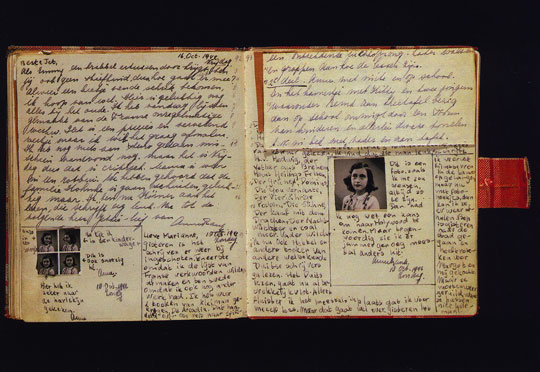 in the attic with Peter van Daan.
 It makes people feel totally vulnerable
