martes, 30 de octubre de 2012

Anne Frank


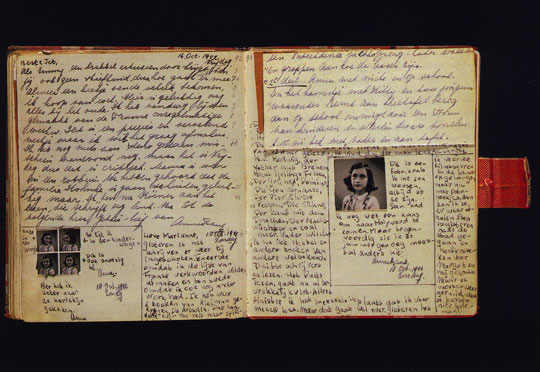
On her thirteenth birthday, Anne Frank’s parents give her a

diary. She’s excited because she wants someone, or

something, in which to confide all of her secret thoughts.

As Jews in German-occupied Holland, the Frank family

fears for their lives. When Anne’s sister, Margot, is called to 

appear before the authorities, which would almost surely 

mean she was being sent to a concentration camp, Anne 

and her family go into hiding. 

For two years, the Frank family lives in this Secret Annex. Mr. 

and Mrs. van Daan and their son 

Peter (who is a few years older than Anne) are also in hiding 

with the Franks. Later, Mr. Dussel, an 

elderly dentist moves in, and Anne has to share her 

bedroom with him.

Luckily, the Franks have tons of reading material and a 

radio. Anne grows in her knowledge.

We see a real change in Anne when she begins hanging out
in the attic with Peter van Daan.

Another big change for Anne happens when the war seems

to be ending. She hears that personal accounts such as her

diary will be in demand after the war ends.


Unfortunately, this does not last. Even as Anne becomes more 

and more sensitive to the suffering going on in the world, her own 

suffering becomes unbearable.

There her diary ends. Two short months after Anne’s fifteenth 

birthday, and two days after he last diary entry, the Secret Annex is 

raided.


Interview to Imre Kertész

1. Before the interview, the presenter visits a monument to the Holocaust created by the American artist Peter Eiserman. Considering the shapes, architecture and general design, in what ways do you think he represents the reality in the concentration camps?

It makes people feel totally vulnerable

2. Which is the paradox the presenter mentions regarding Imre Kertész and the place where he lives?

He lives in the country that tried to kill him, and he feels more free than in any other country

3. Refer to antisemitism before and after Auschwitz according to Kertész.

After Auschwitz, people wanted a new one

4. In what way do reminders of the past in historical books make us "much richer"?

They gave us perspective diversity

Holocaust Timeline

Image Analysis


In this image the visible objects are a bunch of dead and white people, an alive and standing white guy, a fence, a tough floor, walls. The man is reflectionating. 
What I can infer from this image is a summary of the holocaust, the artist wanted to explain that lot of people died and somes did not. But the ones that did not feel exactly the same as the ones that did.
Another inference I made, is that the standing man is remembering how he abused in his glory times, and now he has lost it all as consequence.
My main question is what does the standing man is thinking.

X writting as Y

In this case it is men writing as women and women writing as men. I found 2 good example.

J.K. Rowling writing as Harry Potter, telling the story of this young boy who discovers that he is a magician, son of excelent wizards. He is a legend also, for surviving to the attack of Voldemort (an evil magician) being just a baby.

Charles Dicken writing as Esther Summerson in "Bleak House". She tells the story of her involvement in the tortuous lawsuit of Jarndyce vs Jarndyce. The heartstrings are tugged when she tells us of losing her bloom after catching smallpox, but we know that her author will pair her up with the handsome young doctor.

The benefits of writing as an opposite sex, is that the author can express a very different perspective of how would a man or woman would react in some situation. Also there are some limitiation, because the author has never had the experience of being the other sex, so he doesn't has the escence and vibrations that women or men do have.

Some author may take another approach because of the message they want to express, also it is easier for them to express themselves.

Dunkirk Evacuation

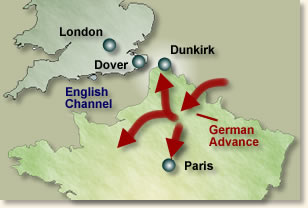
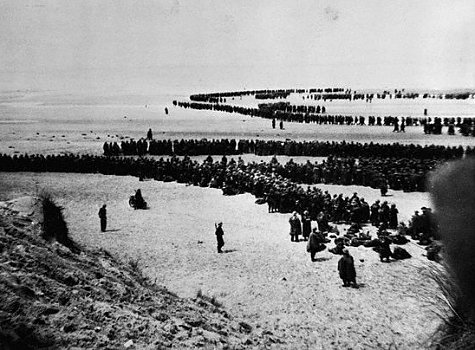
Dunkirk, and the evacuation associated with the troops trapped on Dunkirk, was called a  "miracle" by Winston Churchill. As the Wehrmacht swept through western Europe in the  spring of 1940, using Blitzkrieg, both the French and British armies could not stop the onslaught. For the people in western Europe, World War Two was about to start for real. The "Phoney War" was now over.   The advancing German Army trapped the British and French armies on the beaches around Dunkirk. 330,000 men were trapped here and they were a sitting target for the Germans. Admiral Ramsey, based in Dover, formulated Operation Dynamo to get off of the beaches as many men as was possible. 

The British troops, led by Lord John Gort,  were professional soldiers from the British Expeditionary Force; trained men that we could not afford to lose. From May 26th 1940, small ships transferred soldiers to larger ones which then brought them back to a port in southern Britain.  The beach at Dunkirk was on a shallow slope so no large boat could get near to the actual beaches where the men were. Therefore, smaller boats were needed to take on board men who would then be transferred to a larger boat based further off shore. 800 of these legendary "little ships" were used. It is thought that the smallest boat to make the journey across the Channel was the Tamzine - an 18 feet open topped fishing boat now on display at the Imperial War Museum, London.    


Tamzine - one of the 'little ships'  Despite attacks from German fighter and bomber planes, the Wehrmacht never launched a full-scale attack on the beaches of Dunkirk. Panzer tank crews awaited the order from Hitler but it never came. In his memoirs, Field Marshall Rundstadt, the German commander-in-chief in France during the 1940 campaign, called Hitler's failure to order a full-scale attack on the troops on Dunkirk his first fatal mistake of the war. That 338,000 soldiers were evacuated from the beaches at Dunkirk would seem to uphold this view.     


Their job done, the 'little boats' are towed up the Thames  One of the reasons put forward for Hitler not ordering an attack was that he believed that Britain had suffered from the might of the Wehrmacht once and that this experience would be sufficient for Britain to come to peace terms with Hitler. The total destruction of the British Expeditionary Force might have created such a climate of revenge in Britain that our involvement would be prolonged. That is one idea put forward for why Hitler did not order a full-scale attack on the beaches of Dunkirk - however, we will never know the true reason.

(Sourece: http://www.historylearningsite.co.uk/dunkirk.htm)

Atonement

1. What sort of social and cultural setting does the Tallis House create? What emotions and impulses are being acted upon or repressed by its inhabitants? 
Cecilia / Cee

The Tallis house creates a high class social culture, that as consecuence makes Cee imposible to be in an open relationship with Robbie, because he was an employee.

 2. A passion for order, a lively imagination, and a desire for attention seem to be Briony's strongest traits. In what ways is she still a child? Is her narcissism - her inability to see things from any point of view but her own - unusual in a thirteen-year-old?   

Briony still a child in the way she sees things just under her perspective. That is very unusual in a thirdteen-year.old child, at that time most of the kids have the hability to put themselves in the shoes of other man, empathy.

3. Why does Briony stick to her "version of the story" with such unwavering commitment? Does she act entirely in error in a situation she is not old enough to understand, or does she act, in part, on an impulse of malice, revenge, or self-importance?   

Eventhoug Briony is questioned a lot of times about what she saw at the garden, she answers always what she thinks that happend, but she isn't really sure, she didn't saw clearly Robbie's face. Briony blame Robbie because she use to be in love with him, but Robbie didn't accept her, so now Briony created a whole untrue story to blame him.

4. As she grows older, Briony develops the empathy to realise what she has done to Cecilia and Robbie. How and why do you think she does this? 

Robbie
I think that it is very difficult to a person not to develop the ability of putting themselves in other ones shoes, and it is even harder in the enviorment in which Briony lived, with good values and education. And such an important incident as the one that happend, makes Briony reflect about it, to the point she knows the pain she caused and she wants to apologize.